It's hard to imagine a more preposterous road to platinum success than the one Mumford & Sons traveled. Sigh No More, the 2010 debut by Marcus Mumford and his London crew, is a set of rousing tunes clad in choirboy harmonies, clawhammer banjo and Salvation Army brass that exploded amid a sea of AutoTuned cyber-pop. Soon, the band was backing Dylan on the Grammys, recording Kinks classics with Ray Davies and uncannily recalling the days when string bands like the Carter Family and the Louvin Brothers were radio gold.
Babel steps up Mumford & Sons' game without changing it too much. It feels shinier, punchier, more arena-scale than the debut, with the band hollering, hooting, plucking and strumming like Olympian street buskers. The songs lean toward the hooky folkfest stomps of tunes such as "Little Lion Man" and "The Cave," whose beer-slosh melody and fist-pump dynamics branded Sigh No More. See Babel's hymnlike first single, "I Will Wait," and "Lover of the Light" – both are proof that the Mumfords do dramatic builds, dropouts and soft-loud shifts as impressively as U2 or Skrillex. The fact that these guys are able to do big rock catharsis with humble tools is part of the thrill. But it's the band's lyrics, and Mumford's delivery, that define the album's sound. Babel is full of all manner of religious shoptalk, with Biblical metaphors swirling like detritus in a Christopher Nolan film. Jesus is invoked above Edge-style guitar on "Below My Feet." On "Whispers in the Dark," Mumford declares an intention "to serve the Lord" over a Riverdance bounce. Compared to unfreaky-folk-revival peers like the Avett Brothers or the Low Anthem, Mumford & Sons really double down on the ol' time religion.
Mumford grew up around evangelicals - his parents are English figureheads of The Vineyard, a California-born Christian movement that's so pop-savvy, they run a couple of record labels. (Bob Dylan was a member of the fellowship during his Christian phase in the Seventies.) But proselytizing is not the mission on Babel. Where Rick Ross slings church flavor to add levity to street tales, Mumford uses it to supersize and complicate love songs. "Lovers' Eyes" is merely the best of several songs that wrestle with betrayer's guilt. On "Broken Crown" he seems both sinner and sinned against. "The pull on my flesh was just too strong," he cries with moving hair-shirt candor. Disgraced politicians could learn something from this dude.
Colored with brass, group vocals and Ben Lovett's understated piano, "Lovers' Eyes" and "Broken Crown" (which, like "Little Lion Man," makes showstopping use of the word "fucked") show the subtler and more British folk elements that marked the group's debut. Those flavors get toned down on this record, which is too bad. But the power of the arrangements and Marcus Mumford's tortured-vicar vocals is undeniable. And if his conflation of love, lust and Christian spirituality sounds more like pre-dawn confusion than neat Bible lessons, it feels all the truer for it. His parents should be proud.
Flanked by new band the United Nations – comprised of musicians from Australia, Africa, Samoa, Germany and New Guinea – Xavier Rudd serves up what he has dubbed his "dream project". A thick reggae influence dominates Nanna – "Flag" is pure Marley – but Rudd adds his twists and his band weave in their individual world music flavours: the swirling Andean atmosphere of the title track and the modern indigenous feel of "Rainbow Serpent' in particular add a nice contrast to the LP's dominant sound. For the most part, Nanna is a beautiful celebration of global sound, the only flaw being that Rudd's own unique voice gets a little lost in all that egalitarianism.
If you’re already quite familiar with FFD’s genre-splicing and casual beat-dropping, then you’ll likely find a lot to love in Bays. Staying mostly true to that dub/reggae ethos, the New Zealanders have managed to suppress any urges to branch out with phoned-in collaborations with guest vocalists (although Food-era Kelis would certainly fit the bill) or mess around too much with the agreed formula. Beginning with ‘Wairunga Blues’, a swinging opener that does enough to pique your interest through its slow-burning and alluring groove, it’s not until the following track ‘Slings and Arrows’ that the album really bursts into life: a quickfire drum fill gives way to an uplifting horn section that’ll no doubt whip audiences worldwide into a mass skank-off.
The techno style of ‘Razor’ is probably the biggest change of pace on the record in terms of the band’s sound – presenting the listener with an unrelenting and rather intimidating beat that insists and insists throughout its eight-minute duration, it’s the mark of producer John Faiumu daring to push the band’s sound to unfamiliar territories. And, as such, it’s a little discomforting – following track ‘Makkan’s chilled, shuffling style is a welcome antidote to the strange and unusual trip that the previous song takes you on; a sensation that’s returned to when the similarly techno-focused ‘Cortina Motors’ kicks into life towards the end of the album.
The centrepiece of this intriguing record, however, is ‘Fish in the Sea’. The second longest track here, Joe Dukie’s Dr. Seuss-leaning lyrics about life’s struggles (“my wife needs a wish from the magic fish”) are enough of a draw to permit his band’s instrumentation to gradually build unnoticed around it, and, whilst it doesn’t explode into any kind of epic crescendo, it’s still the most delightful, smile-inducing moment on the record. You get the feeling that, when performed live, this and many of the songs on Bays could go anywhere – they all serve as a blueprint for the live arena, where FFD really do excel in letting their songs come into their own.
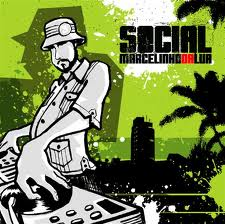
Marcelinho da Lua is a Brazilian reggae/samba/dub/electronic music producer, singer and DJ. Released in 2007, Social brings together a great mix of funk, samba, reggae and dub along with electronic beats. The album also features special guests such as B-Negao and Tonho Crocco. Check it!
Originally scheduled to drop last August, the album was instead put on the shelf and the Brooklyn-based band's punishing touring schedule put on hiatus as Jones battled cancer. For a while, the music stopped, but with Jones's successful treatment and a return to the stage confirmed next month in New York, the new album is just the sort of triumphant return the doctor ordered. The 11-piece Dap-Kings, ably anchored by bassist, bandleader and Daptone Records chief Bosco Mann, again showcase their brand of unbridled soul and funk that has spearheaded the revival of the 1960s and 70s genre, and which has seen them and Jones perform everywhere from the Sydney Opera House to Italy's Umbria Jazz Festival. It's also a sound that has transcended the fringes thanks to some high-profile collaborations. Fans will know the Dap-Kings had a heavy hand in Amy Winehouse's critically acclaimed Back to Black album of 2006, including credits on hit singles Rehab and You Know I'm No Good. Other collaborations with Michael Buble and Mark Ronson, meanwhile, have put the respective talents of guitarists Binky Griptite and Tommy "TNT" Brenneck, trumpeter David Guy, and tenor and baritone saxophonists Neal Sugarman and Ian Hendrickson-Smith firmly in the spotlight. Jones, however, remains the seductive and supremely talented frontwoman, oozing soul whether she's sticking her middle finger up at a love spurned on You'll Be Lonely, or relaying tales of hope as she does on the laidback and feelgood We Get Along. There's an impressive diversity in tempo, too. While first single, Retreat!, is an up-tempo stomper and a thundering start to the album, it's a world away from the mellow Making Up and Breaking Up (And Making Up and Breaking Up Over Again), which lets the by now ubiquitous horns really shine. Stranger to My Happiness, meanwhile, is a playful number that sees Jones sing over a low-flung sax lick and chanting backing vocals that add a sharpness to her melodic command. If there's anything to lament with Give the People What They Want, it's the album's length. Clocking in at about 34 minutes, the adventure is over all too soon. Given the challenges surrounding the album's release, though, it's a small and insignificant gripe. The musician-owned and analog-proud Daptone Records continues to demonstrate that some of the best sounding soul and funk music doesn't require the latest digital equipment, and with labelmates such as Jones and the Dap-Kings on hand and now healthy, the future looks bright.
More Is ThanIsn’t, the fifth proper full-length from Philly beatsmith RJD2, opens and closes with the echoes of distant bird chips. A consummate crate-digger and sample hunter, RJ lines the path in between nu-disco, dusty soul, rock ‘n’ roll, spiraling organ runs, and brash hip-hop. As the title suggests, its 16 tracks are a cacophony of aesthetics pulled from the producer’s myriad inspirations. However, unlike other mad scientists, RJD2′s creations are beautiful offshoots of their distorted components rather than monster mashes.
Anchored by three tracks (“Suite 1″, “Suite 2″, and “Suite 3″), the album’s beats are granted ample room to roam before being reeled back into that celestial calm. During each movement, the creation and subsequent destruction of melodies builds tension across the broader piece. On the first half of the album, the soulful “Temperamental” and disco-leaning “Behold, Numbers!” establish the chillout tempos that the 8-bit electronics, heady Middle Eastern vibes, and rock riffs of “Her Majesty’s Socialist Request” are intent on eviscerating. The latter half’s Motown-indebted “See You Leave” (feat. STS and Khari Mateen), “Got There, Sugar”, and electro-pop current of “Love and Go” (feat. Aaron Livingston) serve similar roles.
This is the sixth studio album from Melbourne's-own Cat Empire, and the first as an independent release. Almost ten years on from the debut which featured the massive hits Hello and Days Like These, the band have had a huge amount of success at home, in Europe and across the globe. Steal The Light is a pretty enjoyable record, led by excellent opening track and lead single Brighter Than Gold, which makes me feel like I'm in a Guy Ritchie film. However, at times there's a little too much mucking around, with tracks like Sleep Won't Sleep sometimes feeling like they're an excuse for band members to explore their favourite pre-recorded keyboard sound effects. Overall the album feels a bit less pop and a bit more exploratory than their other work in recent times. Many tracks including Wild Animals and Prophets In The Sky have had their live debut and received rave responses from fans, and although brilliant live bands like The Cat Empire can sometimes fail to translate to recording with the same energy as they have on stage, both tracks are still highlights here.
Let's start from just over halfway through the third album by Fat Freddy's Drop. It's the point where it goes beautifully bonkers, and showcases the band as not only the kings of laid-back and lilting epics but brain-rattling beat and soul mantras. The first half of Blackbird is just what you expect to hear from Fat Freddy's. But then Soldier starts, soothingly at first, before the pressure drops, an eerie sonar sound takes hold and it plumbs the sonic depths, all with a nod to dub great Augustus Pablo. And from Soldier it ramps up into the pinging future funk of Never Moving, then Mother Mother moves from Caribbean trance done Aotearoa-style with big booming stabs of brass to stealth techno soul, and instrumental finale Bohannon grooves, grinds and bops away, taking you on one last enchanting trip.
With due respect to fans of Amy Winehouse and Adele, songstress Alice Russell is the true blue-eyed soul queen from across the pond. The Essex singer has been around longer than either. Despite four previous albums, she's better known as a collaborator. Her résumé includes work with Mr. Scruff, DJ Yoda, Nostalgia '77, David Byrne, Fat Freddy's Drop, and most notably with Quantic. She possesses the firepower and range of Aretha Franklin and the intensity of Nina Simone. Russell is not a retro-soul singer. She's a soul singer. Period. She has always been more contemporary than nostalgic, her music imbued with more hip-hop, hard funk, dance music, and even jazz rhythms than Motown worship, but it's still rooted in deep soul and R&B. To Dust, her fifth album produced by longstanding guitarist TM Juke (Alex Cowan), is easily her most consistent offering. While there's a more organic, basic approach at work here, Russell refuses to leave her modernism behind. The brief, fingerpopping opener "A-Z" contains an infectious organ and guitar vamp-note to RZA: sample this. They set up behind a bright, breaking snare, and though it's merely a fun, simple, alphabet recitation that recalls Stax, she and her backing vocalists deliver it like a rave-up. First single "Heartbreaker" -- sequenced after "Heartbreaker, Pt. 2" -- welds rock, soul, and pop together in a tight, unforgettable, hooky melody. Russell's voice is out front, pushing the busted love lyric from the darkness into the light, hitting hard via pure vintage gospel. The song's emotion is messy, raw, unbridled; yet in the grain of her voice it is delivered with an immediacy and honesty that demand empathy from the listener. Speaking of gospel, it is a motivating force here, such as in the stirring ballad "I Loved You," the punchy "Heartbreaker, Pt. 2," and the crisp, moody "Citizens," which builds to shattering conclusion. Russell is a restless artist. Her sense of adventure is indulged in the slippery pop of "Hard and Strong," the funky, keyboard and upright bass swing in "For a While," the synth- and snare-fueled futurism of the title cut, and the anthemic closer, "Different." In Russell's world, music is as important as lyric and vocal delivery. This band, time and again, provides a swaggering, unshakeable foundation that gives her and her backing chorus everything they need -- and more -- to lift off. No matter what she's singing, Russell is invested. Emotion, whether happy, sad, devastated, angry, or ecstatic, is revealed not with mere vocal histrionics, but with Russell trusting her the song to guide her voice, telling her what it needs to resonate organically. To Dust is body music for the spirit, a celebration of all that is human. It is the record that should finally put her over to a mass audience. God knows she deserves it.